Treated by Dr. Roshan Kumar Jaiswal
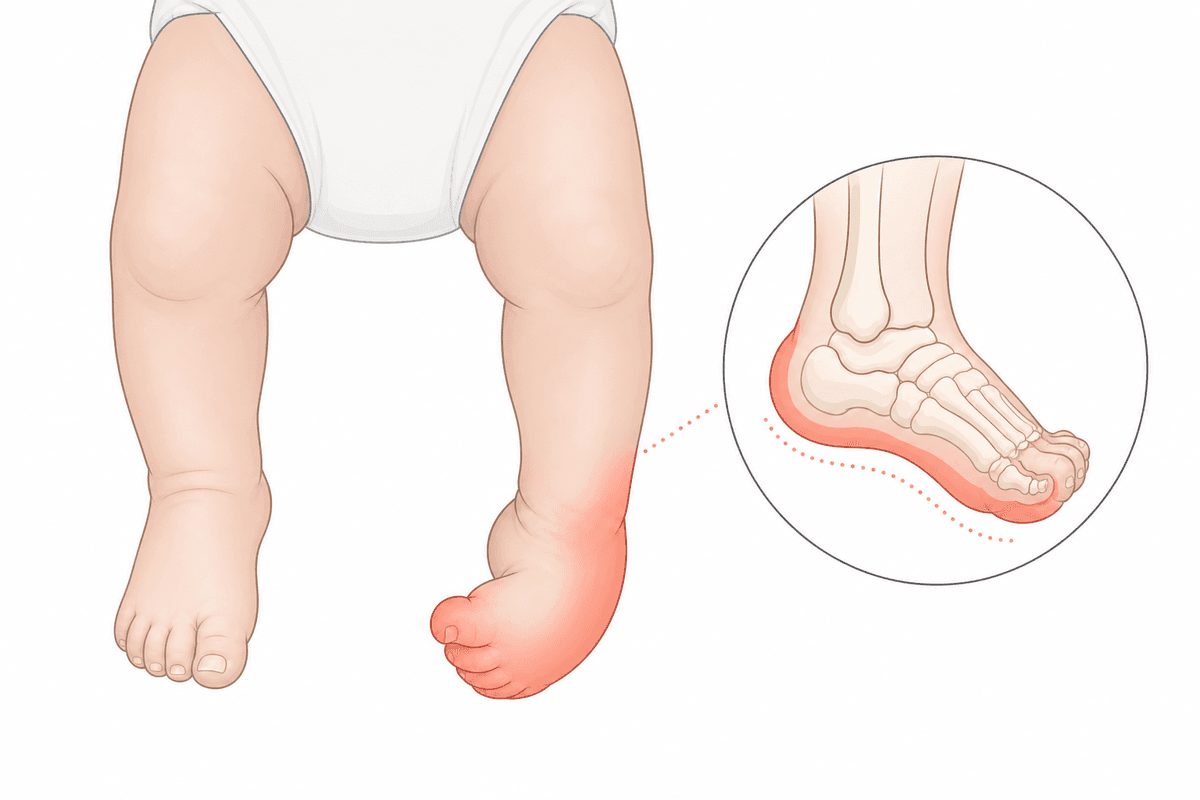
Clubfoot is a congenital foot deformity affecting infants in Secunderabad where the foot is twisted inward and downward, making walking difficult without treatment. This condition can affect one or both feet and is present at birth, requiring early intervention for optimal correction. Dr. Roshan Kumar Jaiswal provides comprehensive clubfoot treatment using the latest pediatric orthopedic techniques to ensure proper foot development and function.
The most common type occurring without any other medical conditions, accounting for approximately 80% of all clubfoot cases. This type responds well to conservative treatment methods when intervention begins early.
Clubfoot that occurs as part of a genetic syndrome or associated with other congenital conditions such as spina bifida or arthrogryposis. This type may require more intensive treatment and longer follow-up care.
A milder form caused by the baby's position in the womb rather than structural abnormalities. This type typically resolves with gentle stretching exercises and rarely requires surgical intervention.
Multiple factors can contribute to the development and progression of this condition.
Clubfoot develops gradually. Recognising symptoms early gives you more treatment options.
From conservative to surgical — we always start with the least invasive option first.
A structured, patient-first approach from first visit to full recovery.
Dr. Roshan Kumar Jaiswal conducts a thorough physical examination of your newborn, evaluating the severity and type of clubfoot deformity. He assesses foot flexibility, reviews family history, and may order imaging studies to rule out associated conditions, ensuring an accurate diagnosis and appropriate treatment plan.
Based on the assessment findings, Dr. Jaiswal develops an individualized treatment protocol, typically starting with the Ponseti method for optimal results. He explains the entire treatment process to parents, sets realistic expectations, and ensures families understand the importance of compliance with bracing protocols.
Dr. Jaiswal personally performs weekly gentle manipulations and applies well-molded long-leg casts to gradually correct the foot position. Each session builds upon previous corrections, with careful monitoring of skin integrity and neurovascular status to ensure safe and effective deformity correction.
After initial correction, Dr. Roshan Kumar Jaiswal provides ongoing monitoring throughout childhood to detect and address any recurrence early. He adjusts bracing protocols as needed, educates parents on compliance strategies, and intervenes promptly if relapse occurs, ensuring the best possible long-term functional outcomes.
What to expect at each phase of recovery.
The first 6-8 weeks involve weekly casting sessions with gradual improvement in foot position. Parents learn proper cast care and monitoring for complications. Most infants tolerate casting well and continue normal developmental milestones during this phase.
Following cast removal and any minor procedures, full-time bracing begins for 3 months, then transitions to nighttime-only wear. This critical phase prevents relapse and requires strict parental compliance. Regular follow-up visits ensure proper brace fit and foot development.
Continued surveillance through early childhood with periodic examinations to assess foot function, gait patterns, and muscle development. Bracing typically continues until age 4-5 years with gradual weaning. Most children achieve normal or near-normal foot function and participate fully in age-appropriate activities.
Over 95% of clubfoot cases treated with the Ponseti method achieve complete or near-complete correction, allowing normal walking, running, and participation in sports activities without pain or functional limitations.
Non-surgical treatment approaches result in no visible scarring and significantly lower complication rates compared to extensive surgical releases, preserving normal foot anatomy and growth potential.
Children successfully treated for clubfoot typically participate in all normal childhood activities including sports and athletics. While the affected foot may remain slightly smaller, function is generally indistinguishable from normal feet.
Early intervention with proven conservative methods dramatically reduces the need for extensive soft tissue or bone surgeries, resulting in better long-term outcomes, fewer complications, and improved quality of life throughout adulthood.
Untreated clubfoot leads to permanent deformity with the child walking on the side or top of the foot instead of the sole, causing painful calluses, infections, and arthritis. The affected leg remains shorter with underdeveloped calf muscles, resulting in severe mobility limitations and disability. Early treatment is essential to prevent these complications and ensure normal foot development and function.
Early treatment means more options and better outcomes. Book a consultation to understand your condition and explore the right path forward.
Consult Roshan Kumar Jaiswal for Clubfoot at any of these 9 centres — pick the one nearest you.