Performed by Dr. Roshan Kumar Jaiswal
Corrective osteotomies in Secunderabad involve surgical cutting and realignment of bones to correct deformities and restore proper limb function in children. This specialized procedure addresses congenital and developmental bone abnormalities, improving mobility and preventing long-term complications. Dr. Roshan Kumar Jaiswal offers expert pediatric orthopedic care with precise surgical techniques tailored to each child's unique needs.
We believe in honest, upfront disclosure so you can make an informed decision.
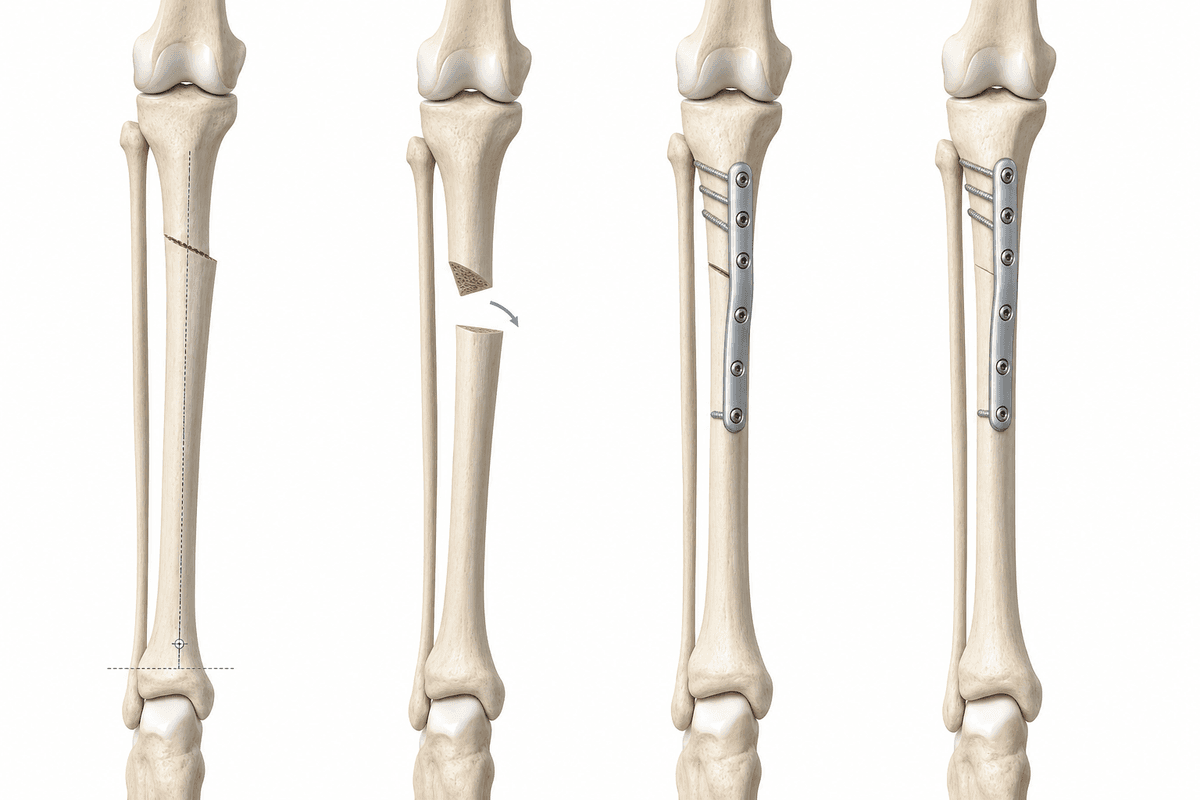
A step-by-step look at what happens during this procedure.
Detailed imaging studies including X-rays, CT scans, or MRI are performed to measure the exact degree of deformity. Computer-assisted planning determines the precise angle and location of bone cuts needed for optimal correction.
Under general anesthesia, a carefully planned incision is made to access the affected bone. Soft tissues are gently retracted to expose the bone while protecting surrounding nerves and blood vessels.
The bone is cut at the predetermined location using specialized surgical instruments. The angle and direction of the cut are precisely controlled to achieve the planned correction angle.
The bone segments are repositioned to the correct anatomical alignment. The surgeon adjusts the position to restore proper limb axis and mechanical alignment, correcting the deformity.
Plates, screws, or external fixators are applied to hold the bones in their corrected position. These implants provide stability during the healing process, allowing bone union in the proper alignment.
A structured, patient-first approach from first consultation to full recovery.
Dr. Roshan Kumar Jaiswal performs detailed clinical examinations and advanced imaging to precisely measure deformities and plan the optimal surgical approach tailored to your child's specific condition.
Using state-of-the-art surgical equipment and computer-assisted planning, Dr. Jaiswal executes accurate bone cuts and realignment, ensuring optimal correction while minimizing tissue trauma and surgical risks.
Dr. Jaiswal's pediatric expertise ensures age-appropriate techniques, careful growth plate preservation, and compassionate care that addresses both the physical and emotional needs of young patients and their families.
A personalized post-operative rehabilitation program is designed, including physical therapy protocols, gradual weight-bearing progression, and regular monitoring to ensure optimal healing and functional recovery.
What to expect at each stage of your recovery journey.
Pain management with prescribed medications, limb immobilization in cast or splint, elevation to reduce swelling, and non-weight bearing or protected weight bearing with assistive devices. Wound care and monitoring for complications are essential during this phase.
Bone healing begins at the osteotomy site confirmed by X-rays. Gradual introduction of gentle range-of-motion exercises to prevent joint stiffness. Continued immobilization or transition to removable brace depending on healing progress.
Progressive weight-bearing and strengthening exercises under physical therapy guidance. Gradual return to normal activities as bone consolidation occurs. Hardware may be removed in some cases once healing is complete. Full functional recovery with restored limb alignment and improved mobility.
Surgical correction achieves proper anatomical axis and mechanical alignment of the limb, eliminating abnormal bone angulation and rotational deformities that were present before surgery.
Children experience enhanced walking patterns, reduced limping, better joint mechanics, and increased participation in age-appropriate physical activities without pain or limitation.
Early correction prevents premature joint degeneration, arthritis, and progressive deformity that would have occurred if the condition remained untreated through skeletal maturity.
Patients demonstrate improved self-confidence, body image, and social participation. Parents report significant satisfaction with cosmetic and functional improvements in their child's condition.
Let's clear up some of the most common myths about corrective osteotomies.
Get a personalised assessment from an experienced specialist. Understand your options, ask your questions, and decide with confidence.
Consult Roshan Kumar Jaiswal for Corrective osteotomies at any of these 9 centres — pick the one nearest you.