Treated by Dr. Roshan Kumar Jaiswal
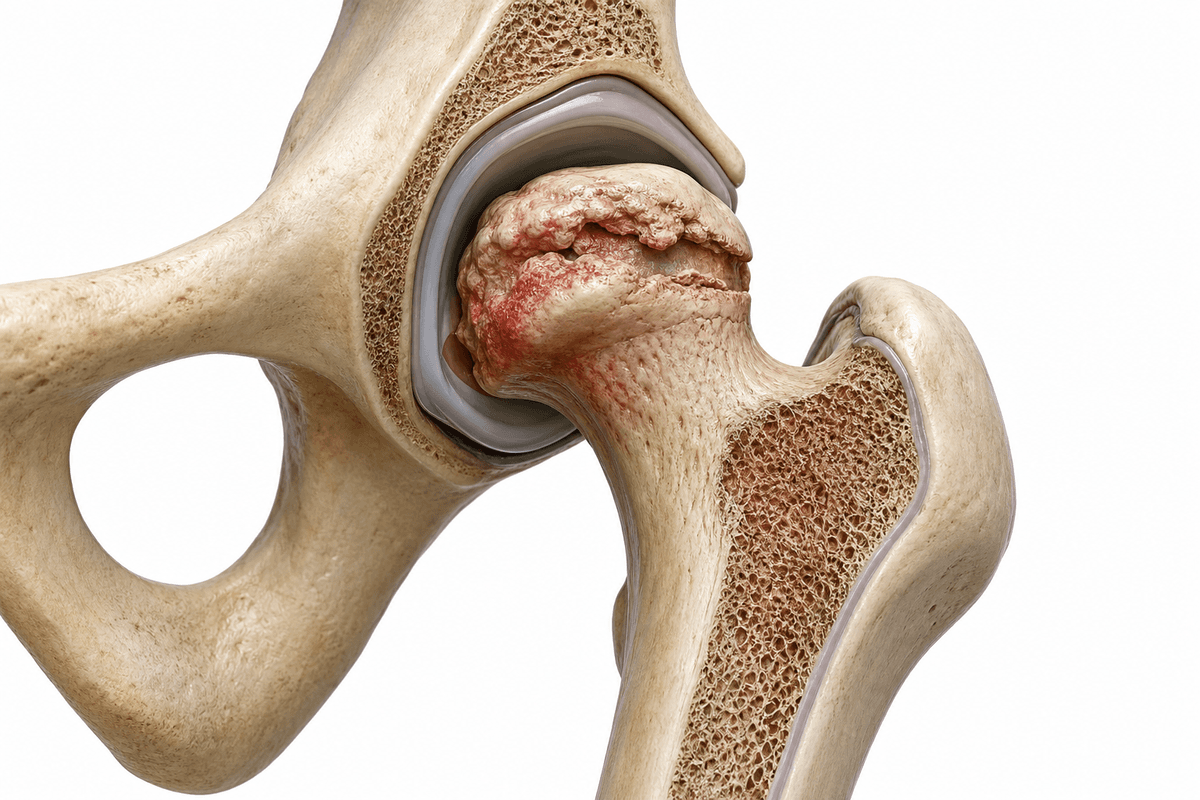
Perthes Disease, also known as Legg-Calvé-Perthes Disease, affects children in Secunderabad when blood supply to the femoral head is temporarily interrupted, causing bone death and deformity. This hip condition primarily occurs in children aged 4-10 years and requires specialized pediatric orthopedic intervention to preserve hip joint function and prevent long-term complications. Dr. Roshan Kumar Jaiswal provides comprehensive evaluation and treatment for children with Perthes Disease using evidence-based approaches tailored to each child's specific stage and severity.
Minimal involvement with no collapse of the lateral pillar of the femoral head. This type has the best prognosis and often requires only observation and activity modification without surgical intervention.
Partial collapse of the lateral pillar with 50% or more height maintained. This intermediate stage may require containment treatment such as bracing or surgical procedures depending on age and femoral head coverage.
Severe involvement with complete collapse of the lateral pillar and less than 50% height maintained. This advanced type typically requires surgical intervention to achieve proper containment and prevent severe deformity.
Multiple factors can contribute to the development and progression of this condition.
Perthes Disease develops gradually. Recognising symptoms early gives you more treatment options.
From conservative to surgical — we always start with the least invasive option first.
A structured, patient-first approach from first visit to full recovery.
Dr. Roshan Kumar Jaiswal performs detailed history taking and physical examination, assessing hip range of motion, gait pattern, leg length, and pain characteristics. He evaluates the child's age, activity level, and disease stage to determine the most appropriate treatment strategy.
Dr. Jaiswal orders appropriate imaging including anteroposterior and frog-leg lateral X-rays to classify the disease stage and lateral pillar involvement. MRI scans may be used for early detection and to assess the extent of femoral head involvement and cartilage health.
Dr. Jaiswal develops an individualized treatment plan based on the child's age, lateral pillar classification, femoral head coverage, and family circumstances. He discusses all options from observation to surgical intervention, ensuring parents understand the rationale and expected outcomes for each approach.
Dr. Jaiswal provides systematic follow-up care with regular clinical and radiographic assessments every 3-6 months throughout the disease course. He adjusts treatment as needed based on healing progression and ensures optimal hip development into skeletal maturity with ongoing surveillance.
What to expect at each phase of recovery.
Following treatment initiation, whether conservative or surgical, the femoral head enters the fragmentation and early reossification stage. Children require activity restrictions, pain management, and regular monitoring. Surgical patients progress from non-weight-bearing to partial weight-bearing with assistive devices.
The femoral head gradually rebuilds bone structure during this critical period. Children continue containment treatment through bracing or benefit from surgical correction while bone remodels. Physical therapy maintains hip mobility and strength while protecting the healing femoral head from excessive stress.
As the femoral head completes reossification and enters the remodeling phase, activity restrictions are gradually lifted. Children transition from protective measures to normal activities with continued monitoring. Final hip shape and congruence determine long-term prognosis and return to full sports participation.
With appropriate treatment and containment, most children achieve good to excellent hip function with minimal pain and near-normal range of motion. Early intervention in younger children typically results in better spherical remodeling of the femoral head.
Successful containment and spherical healing significantly reduces the risk of premature hip osteoarthritis in adulthood. Patients with well-contained femoral heads can expect normal or near-normal hip longevity without early joint replacement needs.
Children treated appropriately can participate in regular activities and sports as healing progresses. With proper management, they achieve normal physical development, maintain active lifestyles, and experience minimal long-term functional limitations.
Treatment addresses or prevents significant leg length discrepancy that can develop during the disease process. Surgical interventions when needed correct alignment issues, allowing symmetrical gait patterns and balanced lower extremity development.
Untreated Perthes Disease leads to progressive femoral head deformity, flattening, and incongruence with the acetabulum, resulting in chronic hip pain and stiffness. The abnormal hip mechanics cause premature osteoarthritis, often requiring total hip replacement in the third or fourth decade of life. Significant leg length discrepancy, limping, and progressive functional disability develop, severely impacting quality of life and mobility in adulthood.
Parents should seek immediate consultation with Dr. Roshan Kumar Jaiswal if their child develops persistent hip or knee pain, unexplained limping lasting more than a few days, or difficulty with activities like running or climbing stairs. Early evaluation is crucial for children aged 4-10 years with these symptoms, as timely diagnosis and treatment significantly improve long-term outcomes. Any limitation in hip range of motion or thigh muscle wasting warrants prompt pediatric orthopedic assessment.
Early treatment means more options and better outcomes. Book a consultation to understand your condition and explore the right path forward.
Consult Roshan Kumar Jaiswal for Perthes Disease at any of these 9 centres — pick the one nearest you.