Treated by Dr. Roshan Kumar Jaiswal
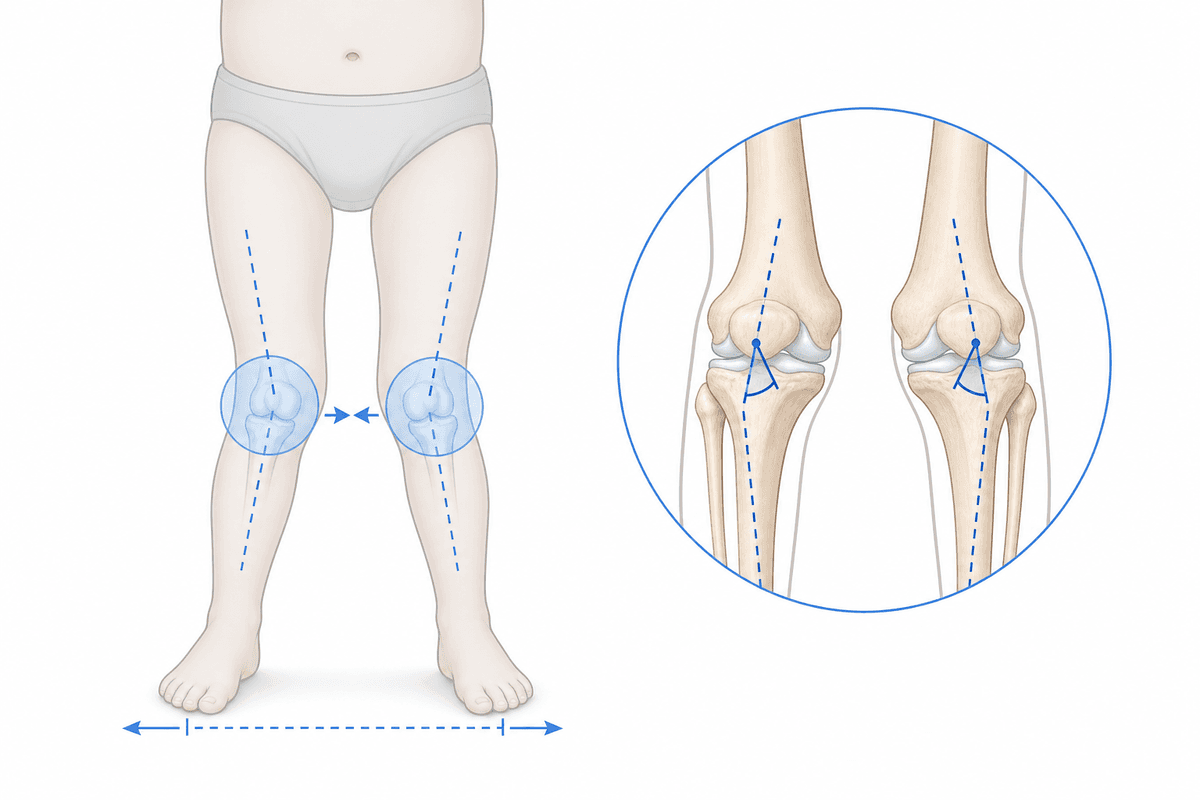
Knock knees, medically known as genu valgum, is a condition where the knees angle inward and touch each other when standing straight, commonly seen in children in Secunderabad. While often a normal part of development in young children, persistent or severe cases may require medical evaluation and treatment. Dr. Roshan Kumar Jaiswal specializes in comprehensive assessment and treatment of knock knees in pediatric patients.
Normal developmental variation occurring between ages 3-6 years that typically self-corrects without intervention as the child grows and bone alignment naturally improves through normal development.
Abnormal knee alignment caused by underlying conditions such as rickets, skeletal dysplasia, metabolic bone disease, or previous trauma requiring medical evaluation and targeted treatment.
Genu valgum developing or persisting beyond age 7-8 years, often associated with obesity, growth plate abnormalities, or biomechanical factors that may require corrective intervention.
Multiple factors can contribute to the development and progression of this condition.
Knock Knees develops gradually. Recognising symptoms early gives you more treatment options.
From conservative to surgical — we always start with the least invasive option first.
A structured, patient-first approach from first visit to full recovery.
Dr. Roshan Kumar Jaiswal performs detailed physical examination measuring inter-malleolar distance, assessing gait patterns, and evaluating overall skeletal development to determine the severity and nature of the knock knee deformity.
Dr. Jaiswal orders standing full-length lower limb radiographs to precisely measure mechanical axis deviation, joint angles, and identify any underlying bone abnormalities or growth plate issues requiring specific intervention.
Based on the child's age, severity of deformity, underlying causes, and growth potential, Dr. Roshan Kumar Jaiswal develops an individualized treatment strategy ranging from observation to surgical correction, ensuring optimal outcomes.
Dr. Jaiswal provides continuous monitoring throughout treatment, adjusting the management plan as needed based on growth progression, response to intervention, and achievement of alignment goals with regular clinical and radiographic assessments.
What to expect at each phase of recovery.
Following guided growth procedures, patients typically return to normal activities within 2-3 weeks with minimal restrictions. Pain management is straightforward and most children experience rapid functional recovery with regular monitoring appointments scheduled.
Over 12-18 months, regular clinical and radiographic assessments track the gradual correction of knee alignment as guided growth plates work. Adjustments to activity levels and hardware removal timing are determined based on correction progress.
After achieving desired correction and hardware removal, patients undergo final alignment verification and return to full unrestricted activities including sports. Long-term follow-up ensures maintained correction through skeletal maturity and addresses any biomechanical concerns.
Achievement of normal mechanical axis and inter-malleolar distance with straight leg appearance, eliminating the characteristic knock knee deformity and improving overall lower limb biomechanics for optimal function.
Normalization of walking patterns, enhanced running ability, and improved participation in sports and physical activities without the awkward gait or limitations previously experienced due to the deformity.
Significant improvement in body image and self-esteem, particularly in adolescents who were self-conscious about their leg appearance, leading to better social interactions and quality of life.
Reduced risk of developing early-onset knee arthritis, patellofemoral pain syndrome, and other degenerative joint conditions that can result from prolonged abnormal biomechanical stress on the knee joint.
Untreated pathological knock knees can lead to progressive knee pain, patellofemoral tracking problems, and increased stress on the inner knee compartment. Over time, this abnormal biomechanical loading may result in premature degenerative arthritis, meniscal tears, and ligament strain. Adults with uncorrected severe knock knees often experience chronic pain, functional limitations, and may require more complex joint preservation or replacement procedures later in life.
Parents should consult Dr. Roshan Kumar Jaiswal if knock knees persist beyond age 7, worsen over time, affect only one leg, or are associated with pain or difficulty walking. Immediate evaluation is recommended if the deformity is severe, rapidly progressive, or accompanied by other skeletal abnormalities. Early assessment allows for timely intervention during the optimal growth window when non-invasive or minimally invasive treatments are most effective.
Early treatment means more options and better outcomes. Book a consultation to understand your condition and explore the right path forward.
Consult Roshan Kumar Jaiswal for Knock Knees at any of these 9 centres — pick the one nearest you.