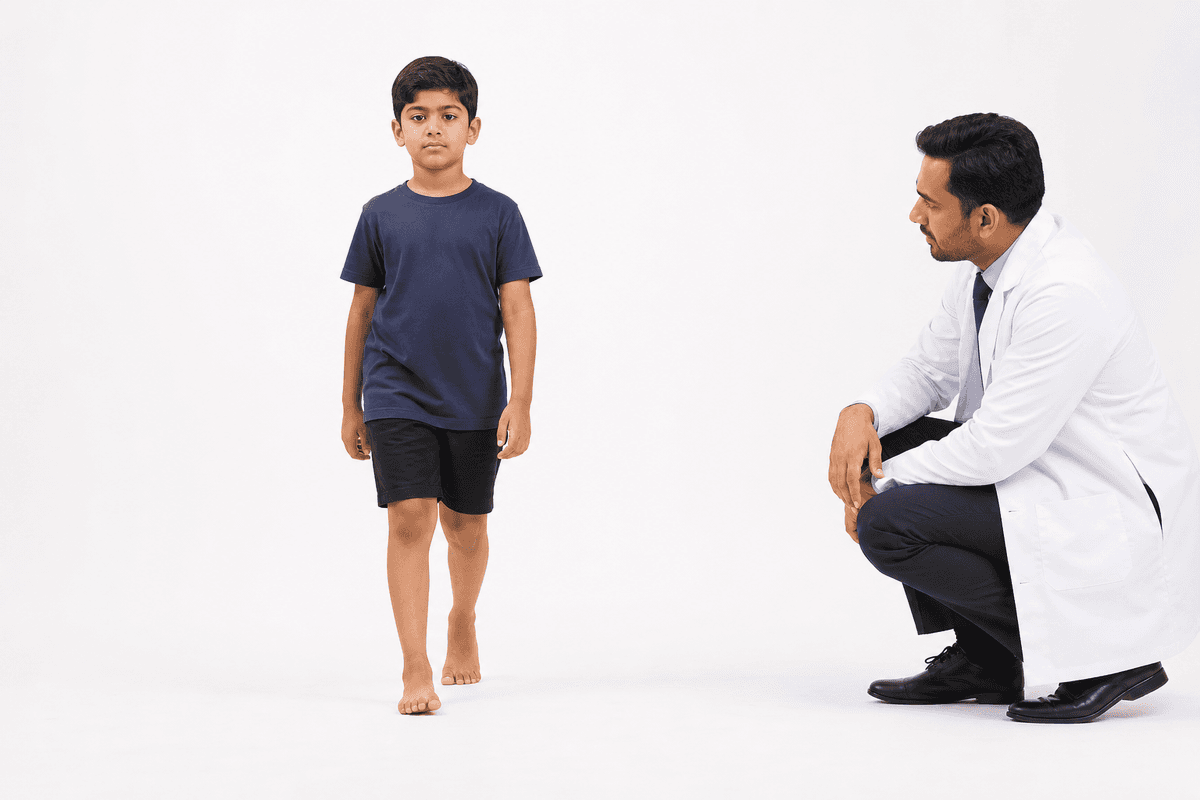
Performed by Dr. Roshan Kumar Jaiswal
Gait correction in Secunderabad addresses abnormal walking patterns in children through specialized orthopedic interventions. This procedure evaluates and corrects issues like in-toeing, out-toeing, toe-walking, and limping through non-surgical and surgical methods tailored to each child's needs. Dr. Roshan Kumar Jaiswal provides comprehensive gait analysis and personalized treatment plans for optimal outcomes.
We believe in honest, upfront disclosure so you can make an informed decision.
A step-by-step look at what happens during this procedure.
Detailed evaluation of walking pattern using clinical observation, video analysis, and physical examination to identify specific abnormalities in gait mechanics and underlying causes.
X-rays, CT scans, or MRI to assess bone alignment, joint positioning, and soft tissue structures contributing to abnormal gait patterns.
Customized approach based on age, severity, and cause - may include observation, physiotherapy, bracing, orthotics, or surgical correction for optimal functional outcomes.
Conservative treatments like physical therapy and orthotic devices are initiated first, progressing to surgical correction if needed for structural deformities or persistent abnormalities.
Structured physiotherapy program to strengthen muscles, improve range of motion, and retrain proper walking mechanics with regular follow-ups to track progress and adjust treatment.
A structured, patient-first approach from first consultation to full recovery.
Dr. Roshan Kumar Jaiswal conducts thorough gait assessments using state-of-the-art evaluation techniques to precisely identify the root cause of abnormal walking patterns in children.
Each child receives an individualized treatment plan combining the latest evidence-based approaches, from conservative management to advanced surgical techniques when necessary.
When surgery is required, Dr. Jaiswal employs modern minimally invasive procedures to correct bone and soft tissue deformities with reduced trauma and faster recovery times.
Dedicated follow-up protocols include structured physiotherapy, regular monitoring of progress, and family education to ensure sustained improvement and prevent recurrence.
What to expect at each stage of your recovery journey.
For surgical interventions, initial healing occurs over 2-6 weeks with protected weight-bearing, pain management, and wound care. Physical therapy may begin within days to weeks depending on the procedure.
Intensive physiotherapy phase lasting 3-6 months focuses on strengthening muscles, improving joint mobility, and retraining proper gait mechanics through targeted exercises and functional activities.
Continued monitoring and gradual return to full activities over 6-12 months with periodic assessments to ensure sustained correction, proper growth, and optimal functional outcomes.
Children achieve significant improvement in walking mechanics with correction of in-toeing, out-toeing, or other abnormalities, resulting in more efficient and natural movement patterns.
Improved ability to participate in age-appropriate physical activities, sports, and daily tasks without pain or limitations, boosting overall quality of life and confidence.
Early correction prevents development of compensatory issues such as joint pain, muscle imbalances, spine problems, and premature arthritis that can result from chronic abnormal gait.
Correction of underlying structural issues leads to better overall body alignment, balanced muscle development, and reduced risk of falls or injuries during childhood activities.
Let's clear up some of the most common myths about gait correction.
Get a personalised assessment from an experienced specialist. Understand your options, ask your questions, and decide with confidence.
Consult Roshan Kumar Jaiswal for Gait correction at any of these 9 centres — pick the one nearest you.