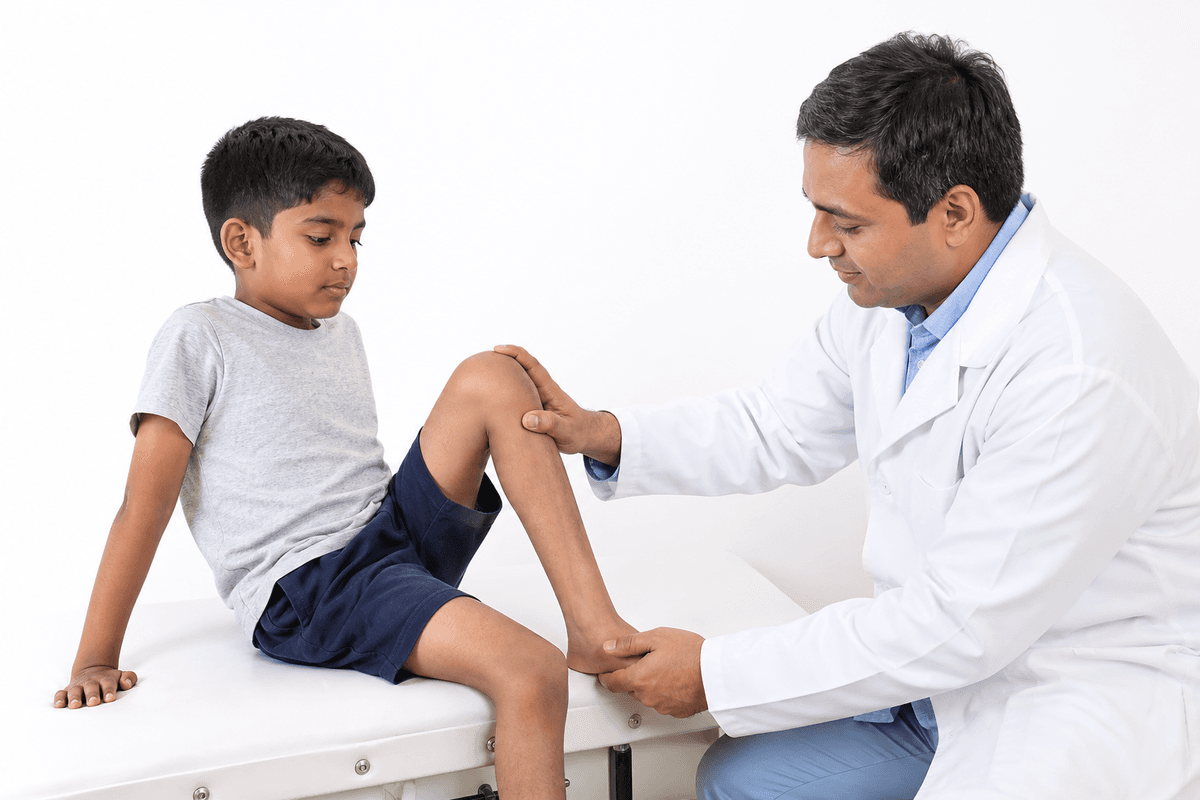
Treated by Dr. Roshan Kumar Jaiswal
Post-polio syndrome is a condition affecting polio survivors in Secunderabad, characterized by new muscle weakness, fatigue, and joint pain developing years after recovery from acute poliomyelitis. This late-onset neuromuscular disorder typically emerges 15-40 years after the initial polio infection and can significantly impact mobility and quality of life. Dr. Roshan Kumar Jaiswal provides specialized pediatric orthopedic care for post-polio patients, addressing skeletal deformities, limb length discrepancies, and functional limitations.
Progressive weakening and wasting of muscles previously affected by polio, leading to reduced strength and endurance in limbs that were partially or fully recovered from the initial infection.
A more severe form characterized by rapid progressive weakness in both previously affected and seemingly unaffected muscles, often requiring more aggressive interventions and mobility aids.
Structural abnormalities including scoliosis, hip subluxation, limb length discrepancies, and joint contractures resulting from prolonged muscle imbalance and altered biomechanics following polio.
Multiple factors can contribute to the development and progression of this condition.
Post-polio develops gradually. Recognising symptoms early gives you more treatment options.
From conservative to surgical — we always start with the least invasive option first.
A structured, patient-first approach from first visit to full recovery.
Dr. Roshan Kumar Jaiswal conducts a detailed evaluation including medical history, physical examination, gait analysis, and imaging studies to assess muscle strength, skeletal deformities, and functional limitations specific to post-polio syndrome.
Based on assessment findings, Dr. Jaiswal develops an individualized management plan that may include conservative measures such as physiotherapy and orthotics, or surgical interventions like corrective osteotomies and limb reconstruction tailored to each patient's needs.
For patients requiring surgery, Dr. Jaiswal performs precise orthopedic procedures including corrective osteotomies, limb length equalization, and joint reconstruction using advanced techniques to optimize alignment, stability, and functional outcomes.
Post-treatment care includes supervised rehabilitation protocols, regular follow-up appointments to monitor progress, adjustment of orthotic devices as needed, and ongoing education about energy conservation to maintain optimal function and prevent complications.
What to expect at each phase of recovery.
Following surgical procedures, patients undergo protected weight-bearing with casts or braces, wound healing monitoring, and gentle range-of-motion exercises to prevent stiffness while allowing bone and soft tissue healing.
Progressive weight-bearing is introduced with physical therapy focused on strengthening surrounding muscles, improving gait patterns, and training with orthotic devices. Patients gradually return to modified daily activities under supervision.
Patients achieve optimal functional improvement with continued emphasis on energy conservation, activity pacing, and regular monitoring for any progression of symptoms. Lifelong follow-up ensures early detection and management of any new complications.
Surgical correction of deformities results in better limb alignment, reducing abnormal stress on joints and improving weight distribution, which helps prevent secondary arthritis and pain.
Combination of surgical interventions, orthotic support, and rehabilitation enables patients to maintain or regain functional independence, with many experiencing significant improvement in walking ability and daily activities.
Correction of biomechanical abnormalities and provision of appropriate support devices substantially decrease joint and muscle pain, improving overall quality of life and comfort during activities.
Timely intervention with appropriate treatments slows the progression of post-polio syndrome, prevents development of severe fixed deformities, and preserves remaining muscle function for longer periods.
Untreated post-polio syndrome leads to progressive muscle weakness, severe skeletal deformities including fixed contractures and scoliosis, and significant functional decline requiring wheelchair dependence. Chronic pain intensifies as joints deteriorate from abnormal stress, while respiratory complications may develop if breathing muscles are affected. Long-term consequences include complete loss of ambulation, severe disability, social isolation, and substantially reduced quality of life.
Consult Dr. Roshan Kumar Jaiswal immediately if you are a polio survivor experiencing new or worsening muscle weakness, unexplained fatigue that interferes with daily activities, or progressive difficulty with walking and mobility. Early evaluation is crucial if you notice increasing joint pain, visible limb deformities, or muscle atrophy, as timely intervention can prevent irreversible complications and preserve function.
Early treatment means more options and better outcomes. Book a consultation to understand your condition and explore the right path forward.
Consult Roshan Kumar Jaiswal for Post-polio at any of these 9 centres — pick the one nearest you.